Denim
One of the world’s worst polluters
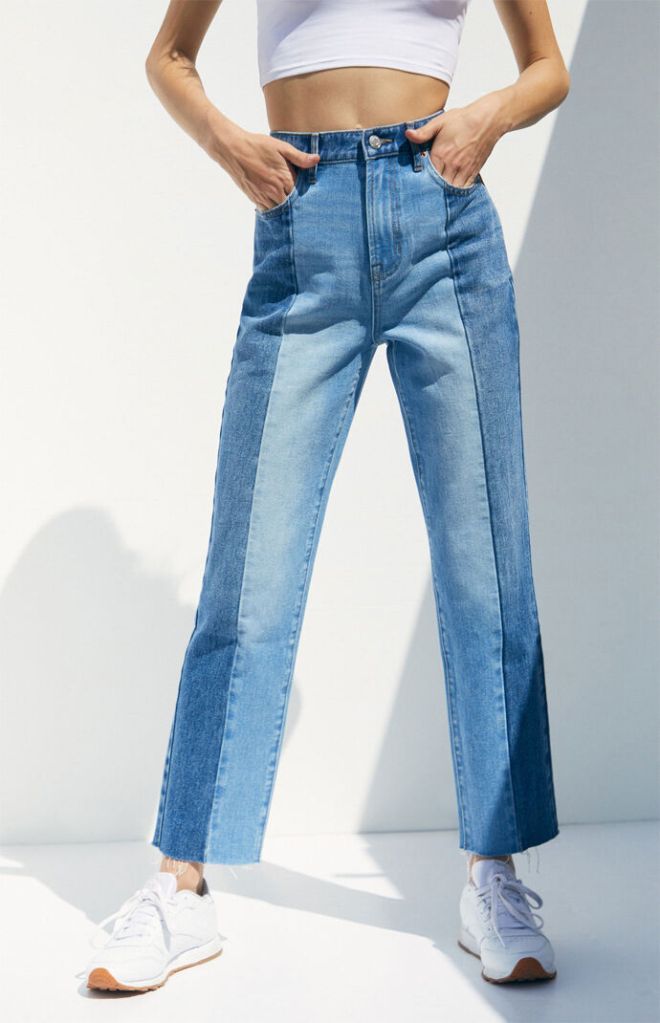
On average, Americans purchase about 4 pairs of jeans annually. Why? because fashion keeps changing. I myself have fallen into this endless consumer cycle where fashion industries keep coming up with more and more styles that I feel the need to buy. This winter alone major fashion industries have pushed many different new styles of denim: colorblock jeans, cropped jeans, jeans that are distressed at the ankle, wide leg, and jeans with the seam in the front.
Many consumers fall prey to all of these styles that will most likely just be thrown away or donated at the end of the season or when a new trend takes over
But did you know that denim is one of the least environmentally friendly fabrics?
Denim is made mostly of cotton with a small percentage of a polyester blend. In order to produce 2 pounds of denim, approximately 7,660 gallons of water are used – that’s more than any other commonly used fabric.
One of the most popular styles of denim today is distressed denim. In order to get that lived-in vintage look, these jeans have to go through many chemical intensive washes. These strong chemicals are not only harmful to the environment and the workers, but also to the consumer in some cases.
Denim is also a major polulter to the communities around the factories where it is made. It is estimated that 70% of all rivers and lakes in Asia are somehow contaminated by waste related to the fashion industry.
The hardest blow of the denim industry is seen in Xintang China, the denim capital of the world. About 1 in 3 jeans in the world are made in this city, and they produce over 300 million pairs of jeans every year.
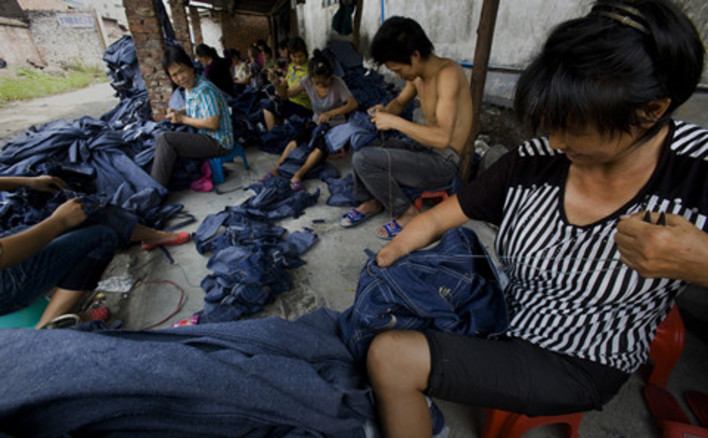
Xintang is badly suffering from bleach pollution. One resident said, “Xintang is so badly polluted that you can’t give away houses for people to live there.” The bleaching factories are reportedly dumping bleach waste directly into the East River, which is now turning blue and smells strongly of bleach.
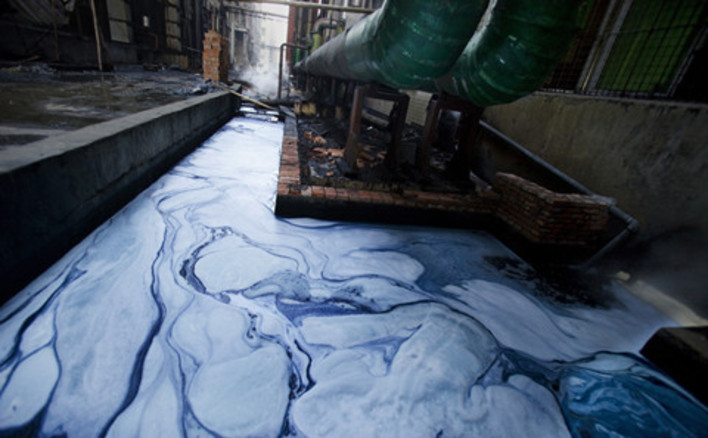
Mercury, lead and Copper have all been detected in the water, and it is obviously very unsafe for these workers.
Another popular style of jeans in the early 2000’s was the stone acid wash.
This style of jean wash was created 40 years ago by Francois Girbaud. Now, this is one of the most harmful washes of denim to the environment because of the large amounts of bleach used. At the time however, the designer did not know the impacts it would have. Now, he is calling for the end to this style of jean. He said, “If people knew that the spraying of permanganate on your jeans to give you that acid- wash look was killing the guy doing the spraying, would you still want that look? I don’t think the customer is aware of what is happening abroad. We have to change the process of making jeans and brands have to be willing to invest because we are destroying the planet”
What can we do?
Luckily, there is action we can take in order to lessen the harm of the denim industry
- Stop over consuming – avoid fast fashion and instead, invest in sustainable jeans that will last a long time. Some really good options are Madewell, Reformation, Everlane and Warp Weft.
- Instead of throwing away old jeans, get them mended or altered. If a pair of jeans is beyond repair, take it to fabric recycling in the Costume Shop! (165 Moreau)
- Shop at thrift stores! this is a great way to reduce your carbon footprint and save some money! This increases the life cycle of denim and keeps it out of landfills. Some great options are Goodwill, the Salvation Army, or online stores like Poshmark and ThredUp.
- Instead of throwing away last seasons jeans, cut them into shorts!
- Look for new innovative ways people are creating jeans. A Spanish company called Jeanologia is creating distressed jeans using laser technology which does not have any known negative affects on the environment. These jeans are also made using only one liter of water.
 Renae Olivia